Recent MRP polls since the election was called have suggested that the Labour Party are likely to win with a large majority. A recent YouGov projection suggested Labour could get a majority of over 200, with others being even more extreme and suggesting a majority of 250. These should be taken with a massive pinch of salt for several reasons, including the impact of increasing electorate volatility, and how their MRP models assign the many non-decided voters. But if we assume that the polls have been broadly right and we wake up once all the votes are counted on July 5th with a landslide victory for Labour, is this a good thing or a real concern?
The myth of the supermajority
At this stage it is helpful to try and dispel the myth of the so-called ‘supermajority’. This is a term that has been imported into this campaign from US politics but has no meaning in the UK. In US politics, a Super Majority (a vote of 2 thirds in Congress) is needed to make any amendments to the written US constitution. Because of the dominance of 2 party politics in the US, this is very challenging and last happened in 1992. In the UK, we have a largely unwritten constitution that can easily be amended in Parliament by a simple majority vote. This means that if just one more MP votes for a change than votes against, it passes. Those warning about such a majority really mean a “large majority” but are packaging it in language they feel will scare traditional Conservative voters and those still undecided more. Yet when Boris Johnson won a majority of 80 seats in the 2019 general election, Conservative MPs were not providing similar warnings of the potential risks of this.
Effective opposition
Our system of Government relies on an effective opposition in the House of Commons to attempt to provide a check and balance to Executive power. When a government has a small majority, or lacks an outright majority all together, passing legislation is very challenging and every vote matters. We only have to look back to Theresa May’s Government between 2017-2019 to see how difficult she found it to pass contentious Brexit legislation. May chose to risk the small majority she had inherited from David Cameron in the belief that she needed a larger one to implement our departure from the EU. This backfired, and she was forced to rely on the DUP support in passing anything. Ultimately, there was enough discontent both from opposition and from Conservative MPs to scupper her Brexit deal three times. This chaos led to her resignation; Boris Johnson being elected as leader before calling a snap election in December 2019 where he got the majority required to pass Brexit legislation.
As we can see above, having a majority is necessary to ensure the Government can pass legislation. It is the opposition’s responsibility to attempt to improve legislation or prevent it from passing. With a system of government that prioritises strong government over effective opposition, this can often feel like the opposition is shouting at the Government steamroller as they are run over by it. While MPs for the governing party may not fully agree with every section of a law passed, the vast majority will ultimately support the government; the risk otherwise is a collapse in confidence and ultimately their administration itself.
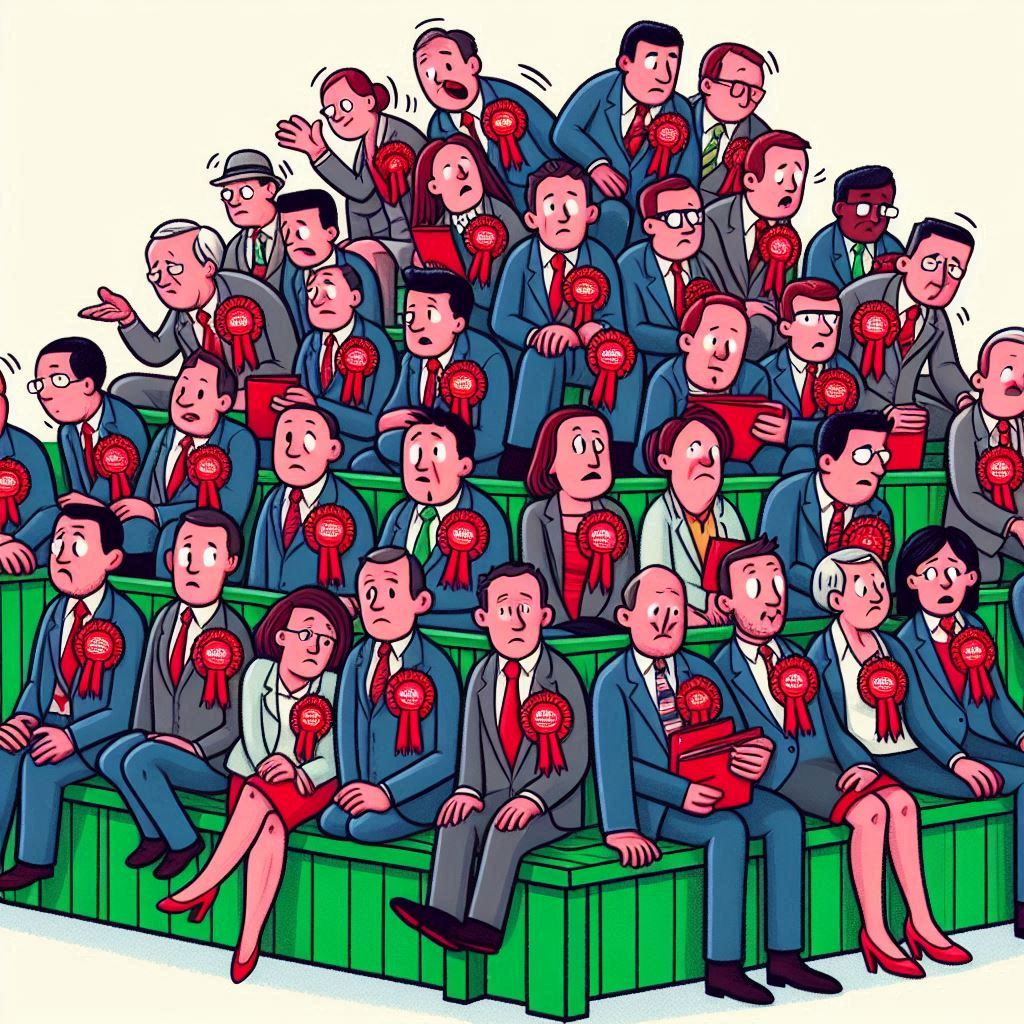
So what if the Conservatives were reduced to only around 100 seats? It would be basically impossible for them to mount any meaningful opposition, even if they combine with other smaller parties. They could put forward amendments as much as they like, only for the Government to remove them and easily win a vote. There is another aspect to this – the system of Shadowing. The official opposition runs a ‘shadow’ to each department, with a shadow Chancellor, Shadow Home Secretary and so on. The total Government benches (including secretaries of state, under-secretaries, junior ministers etc.) run to around 100. If the Conservatives barely get 100 seats, they would have no backbenchers – only those who are tasked with shadowing. This would make it almost impossible for them to effectively oppose as well as support new MPs. We are also likely to see a historic turnover of Members; is it realistic for someone who is newly elected to suddenly join the shadow front bench, even if only as a very junior shadow minister?
By not having an effective opposition, there is a risk that legislation faces less scrutiny, and bad legislation damages the country through unintended consequences. While the House of Lords has a role in amending this, if the Government has a large majority, they will be less likely to pay attention to the Lords who will ultimately concede to the elected chamber.
Internal opposition
An alternative way of looking at this is that opposition could instead ferment on the Labour benches themselves. All political parties are broad coalitions of ideas; it’s how people from different wings of the party such as Tony Benn and Tony Blair for Labour, or Rory Stewart and Suella Braverman for the Conservatives existed under the same party-political banner. They may not agree on everything, but they broadly agree with the same core principles. With a small to medium sized majority, the Whips in Government can persuasively tell their side that if they do not vote along party lines, there is a chance the legislation may not pass. This argument is much harder to sustain if the Government possesses 3 figure majority. Rebels in the Labour Party are much more likely to group together to pressure the government to move in their direction; realistically this will be from left-wing Labour MPs who may be unhappy with the shift to the right under Starmer. This does have the upside of potentially improving legislation; if enough MPs threaten to rebel, they can win concessions from their own party. The ultimate risk of this, however, is that more time is spent on party management than the urgent task of improving and reforming public services.
Climbing the greasy pole
Some MPs are very happy remaining on the backbenches, diligently working for their constituents or focusing on key areas of interest and expertise. Many others will want to climb the ministerial ladder, harbouring dreams of becoming a secretary of state or even one day getting the top job as Prime Minister. The problem is, there are only a certain number of salaried ministerial jobs to go around, and this number is actually set by law at 109. Of course, the Government could simply amend this legislation to increase that number if it wished to, but spending more money on ministerial salaries would not be popular with the electorate in a cost-of-living crisis. This means that most Labour MPs in party (if they win a big majority) will languish on the backbenches, with little hope of quickly starting to clamber up to the next rung. There would also be jockeying from current members of the Shadow Cabinet who’s equivalent position does not exist in the actual Government.
How long an ambitious MP may wish to stay in the obscurity of backbenches before becoming frustrated with the party leadership and breaking ranks against them will be an interesting one to watch. Again, party management will be key to this; if Labour can convince their Parliamentary colleagues that their plan is working, and they need to remain united then this will be easier than if change fails to come and reality starts to bite.
So, while a change of the guard at this week’s election seems likely (but not a done deal), the size of the majority and opposition could shape the next Parliament in interesting and possibly unusual ways. Our first glimpse of what will unfold on election night will come just after polls close, when the Exit Poll is released.

 Politics with Alex
Leave a comment