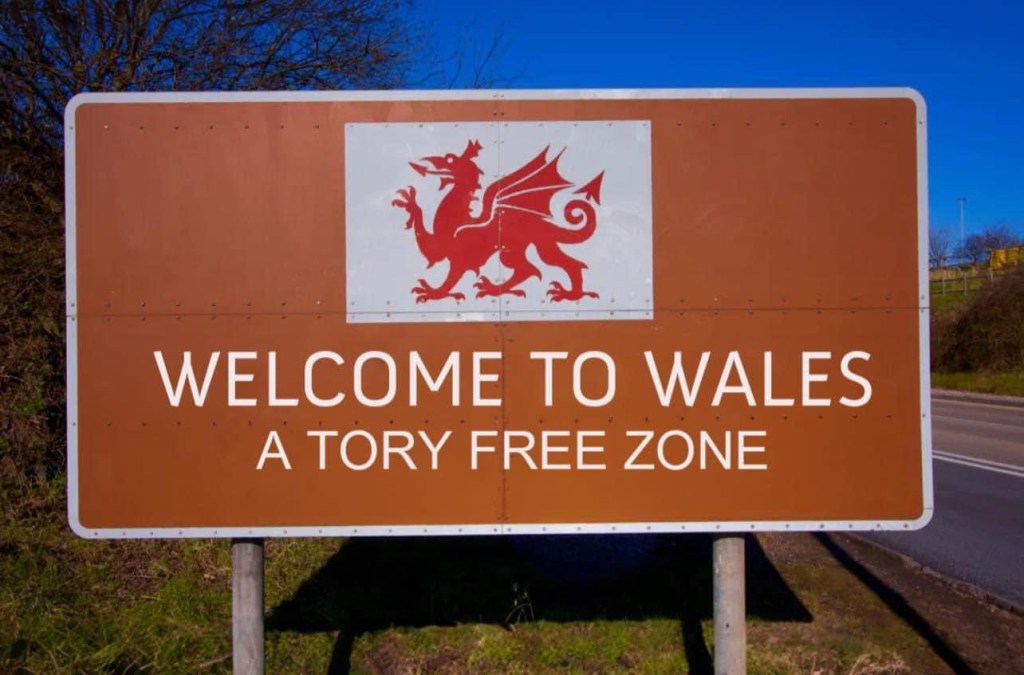

The dust has started to settle on the UK General Election campaign of 2024, with the result being broadly as the polls predicted. There will be endless columns and analysis dedicated to the picture overall for Labour’s landslide victory and the Conservative Parties disastrous result. This post will instead look specifically at what the results mean for Wales, and what that might mean for future Senedd elections.
Wales now a ‘Tory Free’ Zone
Being fought under new Parliamentary boundaries which reduced Wales’ seats from 40 to 32, direct comparisons to the 2019 General Election are difficult. Nevertheless, the Tory wipe-out in Wales is clear to see just from the picture below. In 2019 the Conservatives won 14 of 40 seats, including many seats in North Wales that are considered part of the “Red Wall” which went blue for the first time. This has now dramatically shifted to 27/32 seats for Labour, 4 for Plaid Cymru and 1 for the Welsh Liberal Democrats.
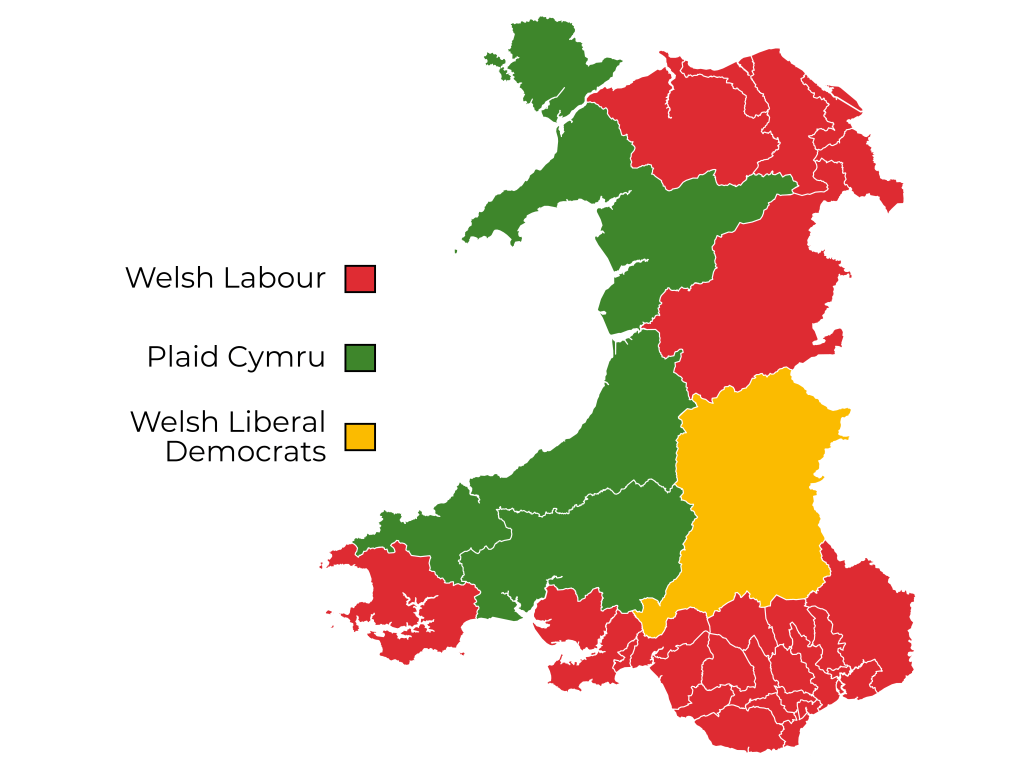
High profile casualties in Wales include former Welsh secretary Alun Cairns in the Vale of Glamorgan, Welsh secretary David TC Davies in Monmouth, and Sunak’s senior parliamentary aide Craig Williams who was the caught up in the Betting-gate scandal. Yet behind this incredible shift in seats could be trouble ahead for Starmer and Gething.
Welsh Labour support a mile wide but an inch deep
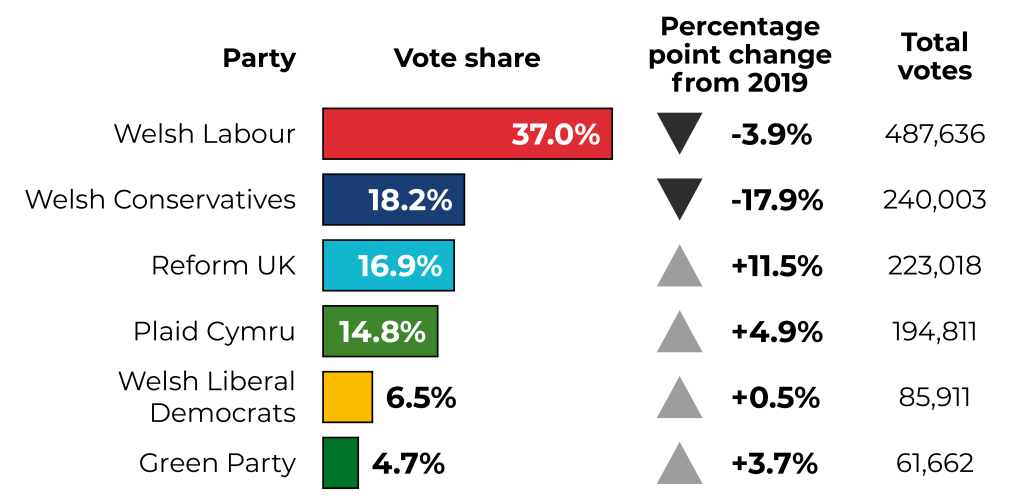
Because of the unfair and disproportionate impact of the UK’s First Past The Post electoral system, Labour managed the impressive feat of getting so many seats despite getting fewer votes across the country than in 2019. The swing against Labour across Wales was -3.9%, but in certain seats this was much larger. For example, New Secretary of State for Wales Jo Stevens in Cardiff East won only 40.5% of the vote, having previously received over 60% of the vote in the previous seat of Cardiff Central. That Labour in Wales have managed to get over 80% of the seats on less than 40% of the vote is ludicrous and demonstrates that Welsh Labour support is spread very thinly in some areas. Almost as many people in Wales voted for right wing parties (463,021) as voted for Labour (487,636) yet they have precisely 0 seats in Wales. While this might be good for progressive or left wing politics, this is not good for representative democracy, and future articles on this site will undoubtedly deal with reform of the UK voting system.
Reform on the rise in the Senedd?
While FPTP is very good at keeping out smaller parties and prioritising established parties who can form majority governments, Senedd elections work in a more proportional way using the Additional member system. Despite not being full proportional representation, this does more accurately reflect how people voted across Wales. If (and it’s a big if) Reform’s vote share in Wales at the General Election was carried across to the next Senedd Elections due in 2026 then this would almost certainly mean them gaining several seats and significant influence in Welsh politics. Whether this would be enough to form a coalition with the Welsh Conservatives and oust Labour from power for the first time since the Senedd was formed is another question, but the more proportional system of voting means that Gething will have a fight on his hands to retain power.
Low turnout – forgone conclusion or voter apathy?
Turnout across the UK for this general election is estimated at around 60%, the lowest since 2001. In Wales, that turnout is even lower at 57%, and in certain areas this was even worse. Merthyr Tydfil and Aberdare, for example, recorded only 47% of voters casting their ballot. Of course, you can never know exactly why someone didn’t vote. Whether it was the message that the election was already in the bag meant that people living in areas where Labour almost always win felt they didn’t need to go and vote was a factor, or whether people actually feel such apathy towards politicians that they don’t see the value in voting is unclear. For many years Labour took voters in Scotland for granted, and that led to them being nearly wiped out by the ascendant SNP in the 2015 Election. There is a risk that if people, particularly in deprived areas such as the Valleys, feel that is the case they will vote for populist or extreme parties simply to register their discontent.
No more blame game
It has been politically convenient in some ways for politicians in Cardiff to have a Conservative administration in Westminster, and vice versa. When public services are not working (such as the record NHS Wales waiting lists), Gething can argue that it is London that holds the purse strings, and that they need more investment for things to improve. Likewise, when the Conservatives are attacked on their record on health, they can simply point across the border and tell voters ‘It’s even worse in Labour run Wales’. Now, for the first time in 14 years, both Westminster and the Senedd are led by Labour Governments and Starmer has just embarked on a tour to ‘reset’ relations with the devolved administrations. The excuses will only hold for so long, before the Conservatives can reasonably argue that with Labour in power, they only have themselves to blame if things don’t improve.



 Politics with Alex
Leave a comment