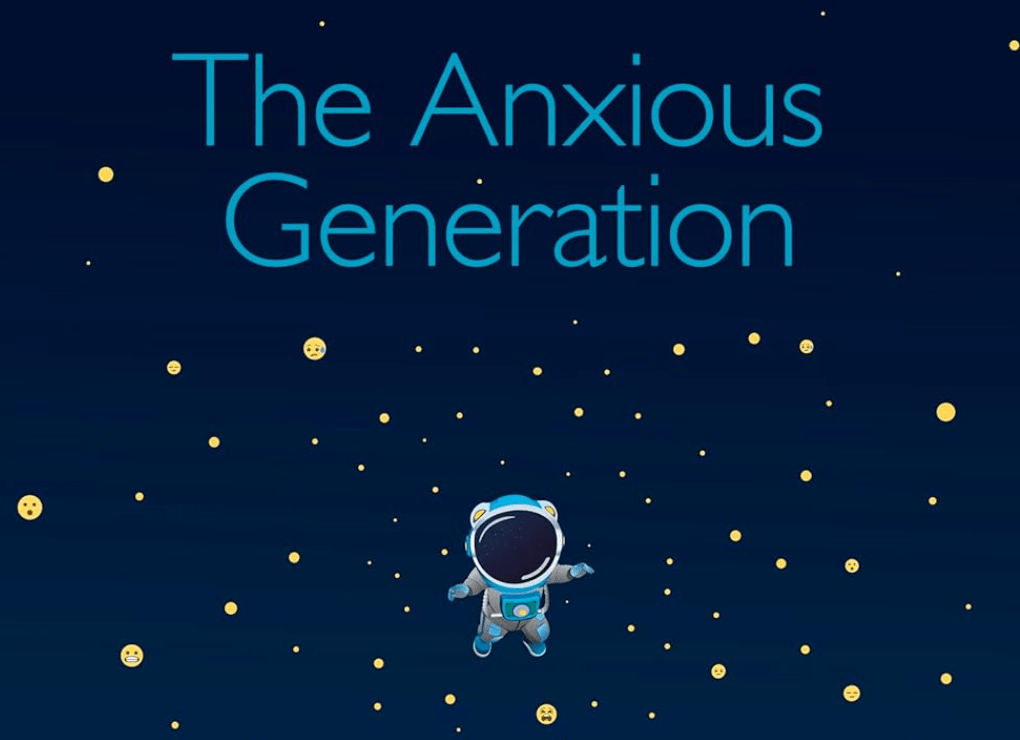
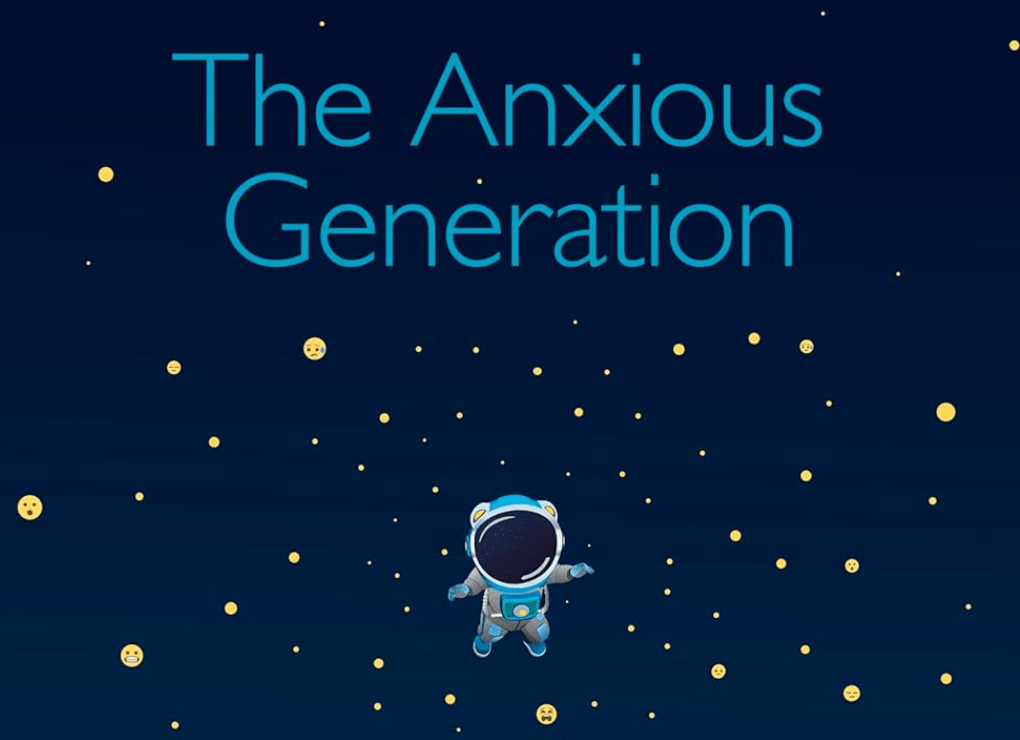
First published in 2024, but more relevant than ever thanks to calls to ban social media for under 16s, Jonathan Haidt’s bestseller The Anxious Generation is a compelling and timely read. Using a variety of evidence about the significant impact on mental health and child development, it suggests that the rapid introduction of smartphone technology between 2010 and 2015, and a move from ‘in-person’ to ‘virtual’ play has fundamentally rewired the brains of children, causing an epidemic of mental illnesses around the world.
Compellingly written, each section of the book follows a theme. Firstly, it charts the decline of the ‘play-based childhood’, arguing that parents have over the last few generations over-protected their children in the real world. It uses examples of when children were first allowed freedom to roam their local neighbourhoods; go to the shops, the park or just hang about unsupervised by adults. The evidence suggests that this has gradually happened later and later, from 6-7 a few generations ago, to well into teenage years now. This was partly fuelled by a fear of perceived dangers from strangers or roads, yet statistics suggest that road deaths and serious injuries of children are on a steady downwards trend, and killings of children by strangers are thankfully vanishingly rare. It argues that children need to partake in ‘risky play’ – climbing trees with the risk of falling out of them or playing with other children with the risk of getting into arguments, in order to build resilience and ‘anti-fragility’. This is the area of the book receiving the least attention in current political discourse, but in some ways is the most interesting as it looks at much longer and broader trends of socialisation, not just looking at banning social media or reducing smartphone usage as a magic bullet.
The next section of the book looks at the ‘great rewiring’ in detail, and the specific harms it does to children; those of social deprivation, sleep deprivation, attention fragmentation and addiction. For a teenager with access to a smartphone, these harms come at a time where the brain is in rapid development, and patterns of behaviour are formed that can have a significant impact later in life. It also looks at how the impact is different for different sexes, with girls more likely to suffer from depression and low-self esteem, and boys more likely to withdraw from society all-together.
The final section of the book comes up with some suggestions for change. It argues that collective action is the only way of making any significant and lasting change; if only a few parents stop their children accessing smartphones, the peer pressure of those who do have them could cause social ostracism or bullying. As soon as it becomes the norm to have a smartphone, you become the odd one out for not having one. And, in school, being the odd one out can be a tough place to be. It suggests things that technology companies can do, governments can do, and schools can do. Interestingly, some of this is already starting to happen around the world, or could easily be implemented.
Haidt’s suggestion of no social media before the age of 16 has been implemented in landmark legislation in Australia, which banned those under 16 from having accounts, putting the onus on the platforms for enforcing it. Other countries have already said they are considering a similar ban, and in the UK the House of Lords has put pressure on the Government by passing an amendment to the Children’s Wellbeing and Schools Bill which calls for an outright ban. The intention of this is to demonstrate the strength of feeling, and ensure that the recently launched consultation on the issue doesn’t just become a way of tech companies lobbying the Government to water down any such proposals. There is no reason why the age verification systems recently implemented in the UK to prevent them from accessing other harmful materials could not be expanded to social media, if there is abundant evidence that these platforms also harm children.
Recent YouGov polling suggests that 74% of the public would also be in favour of such a ban. But a ban is not a silver bullet; other organisations such as the NSPCC have come out against an outright ban, arguing that it would push children into less regulated areas of the internet where the most graphic and harmful material exists. There are of course some benefits to social media; being able to keep connected to friends and family remotely, creating and nurturing virtual communities, or organising and campaigning are all social goods. But, if the harms it cause in the forms of an epidemic of mental illness, self-harm and even suicide are not addressed then we risk being complicit in not protecting our children from an avoidable harm. The solutions won’t be simple to implement, and the technology platforms will fight tooth and nail to prevent losing customers and a huge source of revenue, but The Anxious Generation outlines clearly and persuasively why action is needed, and what could be done.
The Anxious Generation can be ordered here, and you can read more of Haidt’s research on the topic on his After Babel Substack.


 Politics with Alex
Leave a comment