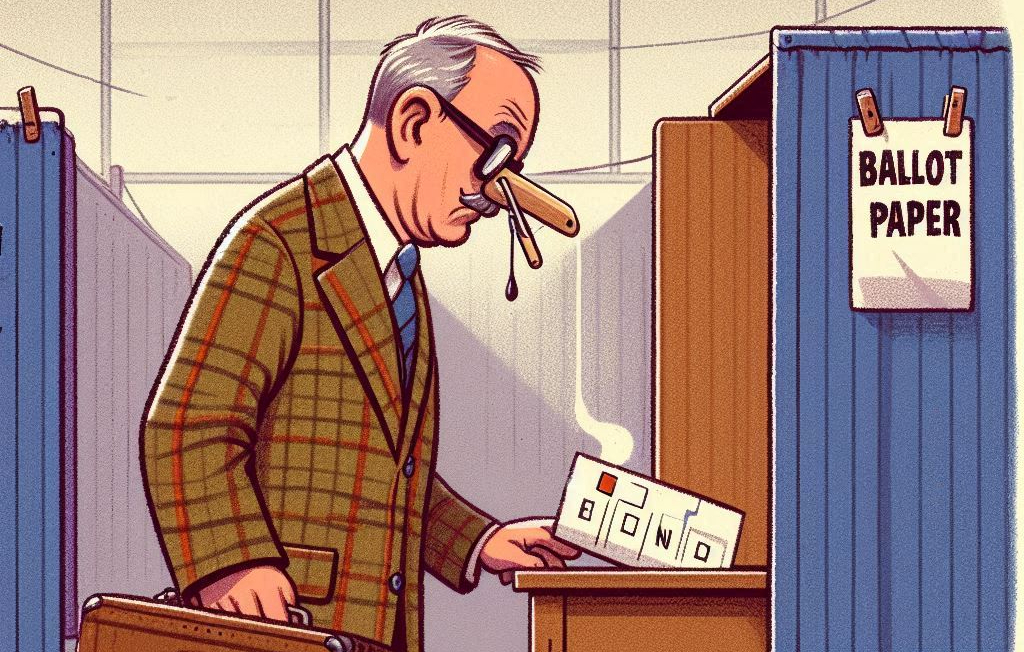
I’m a left leaning voter who has in the past been an on-off member of the Labour Party since I could first participate in a General Election in 2015. I joined the party for the first time because I felt the country needed a more radical change from the ‘austerity-lite’ offered by Miliband in that election. Like many young voters, I was inspired by the obscure left wing back bench candidate Jeremy Corbyn and voted for him in the subsequent leadership election. His anti-austerity, socialist policies struck a chord after 5 years of savage spending cuts brought in by the Con-Lib coalition Government. Despite being overwhelmingly popular with the membership, Corbyn went on to lose in 2 General Elections. This article is not, however, about the merits or failings of Corbyn’s leadership of Labour which ultimately led in 2019 to Labour’s worst election defeat since 1935; many others have written about the subject, including Owen Jones’ excellent book ‘This Land’. This article is instead about what has happened since that crushing defeat less than five years ago, potentially standing on the precipice of the first Labour General Election victory since Blair’s third win in 2005.
That’s right, it’s been nearly 20 years since Labour were last given a mandate to govern by the electorate. In that time, we have seen Austerity, Brexit, COVID, and war in Europe sparked by Russia’s invasion of Ukraine. We have also seen a succession of Conservative Prime Ministers, each representing a further scraping of the barrel of standards, decency and competency in office. Cameron, May, Johnson, Truss, Sunak; 14 years and 5 Prime Ministers. For context, going back 5 more Prime Ministers takes us back an additional 34 years in time to James Callaghan’s victory in 1976. The UK now feels like it’s engulfed in a permanent state of chaos, lurching from one Prime Minister to another, from one poorly handled crisis to the next.
Into the fray, steps lead of the Labour Party Sir Keir Starmer. Former head of the Crown Prosecution Service, Knight of the Realm and son of a toolmaker (brand new information to you I’m sure) with his one-word slogan for the 2024 General Election: Change. What we are changing from is obvious; the last 14 years of mismanagement and scandal. Of dodgy PPE deals, sex-scandals and a slow degrading of all our public services. Yet what the Labour party is changing to, is far from obvious even to me – a self-confessed political nerd. Starmer has his 6 first steps for change, but to me they don’t seem to even scratch the surface of the scale of change that is needed. There is no inspiring vision to transform our crumbling public services after 14 years of austerity and chaos, beyond a few more NHS appointments and a smattering of teachers. There is no plan to supercharge our transition to a green economy and try to prevent the catastrophic consequences of climate change, beyond setting up Great British Energy (which many experts feel will barely touch the sides of what is needed to transition to Net Zero). And they have wrapped themselves in such a fiscal straight jacket that they may even struggle with these modest steps.
I voted for Starmer in the leadership election of 2020. I recognised that unfortunately the Labour party under Corbyn was unelectable, and I felt that Starmer represented a more electorally palatable option, while still appearing to be progressive. It is widely documented that he has subsequently junked many of the policies that got him elected as leader. Whether this was a cynical ploy to appeal to the left of the party and gain their votes, or whether this was simply Starmer changing his opinion as the reality of politics changed around him is contested, but again this left me very disillusioned. Not for the first time, I cancelled my membership of the party.
Since 2020, Starmer has changed from offering some radical ideas (Common ownership of public services for example), to something much less exciting. I understand the reason for such epic expectation management. True or not, the Conservatives have always been good at painting Labour as the party who will increase your taxes. It is a discussion for another day about the positive argument for taxes, but sadly this is a debate that the progressive left is not winning. The Labour party were not trusted by the electorate on the economy in 2010, 2015, 2017 or 2019. Starmer and his shadow Chancellor Rachel Reeves clearly felt they had to make a clean break with the Corbyn manifesto and its significant increases in public spending. But having painted themselves into a corner by ruling out any increases in the main areas of tax generation (VAT, National Insurance, Income Tax), and likely inheriting a very difficult economic picture they will find that any change at all is very difficult to achieve.
The so-called ‘Ming Vase’ strategy for this campaign makes political sense based on the poll leads Labour have enjoyed over the last couple of years. They want to gently carry themselves over the finish line and into 10 Downing Street, without causing any gaffes or unforced errors. Meanwhile Sunak’s campaign has been littered with unforced errors and barely a day goes by without something else splashing the headlines: calling an election in the rain, asking voters in Wales if they are looking forward to the Euros (that Wales had not qualified for), leaving D-Day commemorations early, the ongoing saga of Gamble-Gate. It’s as if he too had gone to the bookies and put some of his vast wealth on him leading the Conservatives to a wipeout defeat. The very suggestion that the Conservatives could be pushed into third place, with the Lib Dem’s becoming the official opposition is almost unbelievable.
Somewhat paradoxically, the same polls that seem to show the potential for a landslide victory for Labour also tell us that no-one is enthusiastic about Starmer’s project. This is where the risk lies. If everyone on the left reads the polls and assumes the Tories are finished, and that Labour are headed for a majority then they may forget that for that to happen, people must vote for it. As a politician once said, “Polls are like perfume – nice to smell, dangerous to swallow”. The Labour party’s lurch rightwards has clearly been calculated to appeal to former Conservative voters who can no longer stomach voting Tory. But in hoovering up those votes, and in trying to reclaim the ‘Red-Wall’ that Johnson took in 2019, there is a significant risk of alienating more progressive voters who will either look elsewhere, or just stay at home. If everyone reads the polls and thinks it’s a done deal, we risk another 5 years of Tory rule. By not being bolder and clearer about the scale of change needed now, Starmer risks the charge that “all politicians are the same, what’s the point in voting”. Apathy is the enemy of change, and change is desperately needed in this country.
And that is why, despite my frustrations I will be holding my nose and voting Labour on July 4th. I live in Cardiff, and do not live in a particularly marginal seat. The boundaries in Cardiff have changed at this election (due to Wales losing 8 seats in the periodic boundary review), but the previous seat has changed hands between Labour and Lib-Dem in recent history. Thankfully, the Conservatives have not won in my seat since 1987, but the margin of victory in some recent elections scare me. The Conservatives are so good at winning elections partly because they have an almost complete monopoly on the right. If you want to vote for a right-wing party, you either vote Tory, or a minor party that has no chance in winning (we’ll see if Reform UK change that this time round). Meanwhile, if you want to vote for a left-wing party, your vote is split between Labour, Lib-Dem, Green and Plaid Cymru/SNP in Wales/Scotland. For example, at the 1987 election, the Conservative won the seat, despite Labour & the Liberals combined getting 10,000 more votes.
Do I believe whole heartedly in the Starmer project? No. Do I think Starmer is an inspiring leader? No. But after 14 years of chaos, maybe we want some boring, stable politics again. This will be my 4th General Election with a vote (I was 17 in 2010), and while I have often had a local MP who I voted for, this has never been reflected in the composition of the Government nationally. Just for once, it might be nice to have voted for the person who gets the keys to Number 10. Despite my disillusionment and reservations, I can’t be someone who risks splitting the vote and letting the Conservatives win again. Defeating the Conservatives to the opposition benches is more important than getting everything I want in a manifesto. But, if those polls are right, and we are headed for a large Labour majority, then we on the left must push from the outside and from within to ensure that Starmer is as progressive and radical as he claimed to be when he was first elected Labour Leader.
And what can you do? If, like me, your overwhelming priority is to remove this corrupt and cruel Conservative party from office, then you must go and vote on the 4th July. Tactical voting is a contentious subject (perhaps a topic for another day), and it never feels nice voting for the candidate/party you dislike least, rather than the candidate/party you agree with the most, but sadly it’s a reality of our electoral system. There are lots of helpful websites which tell you the party most likely to oust the Conservatives. Finally, make sure you bring ID with you on the day. On the 4th July we can end the chaos and calamity, but only if we go and vote for it.


 Politics with Alex
Leave a reply to Parliamentary majorities – Can there be too much of a good thing? – PolITICS WITH aLEX Cancel reply