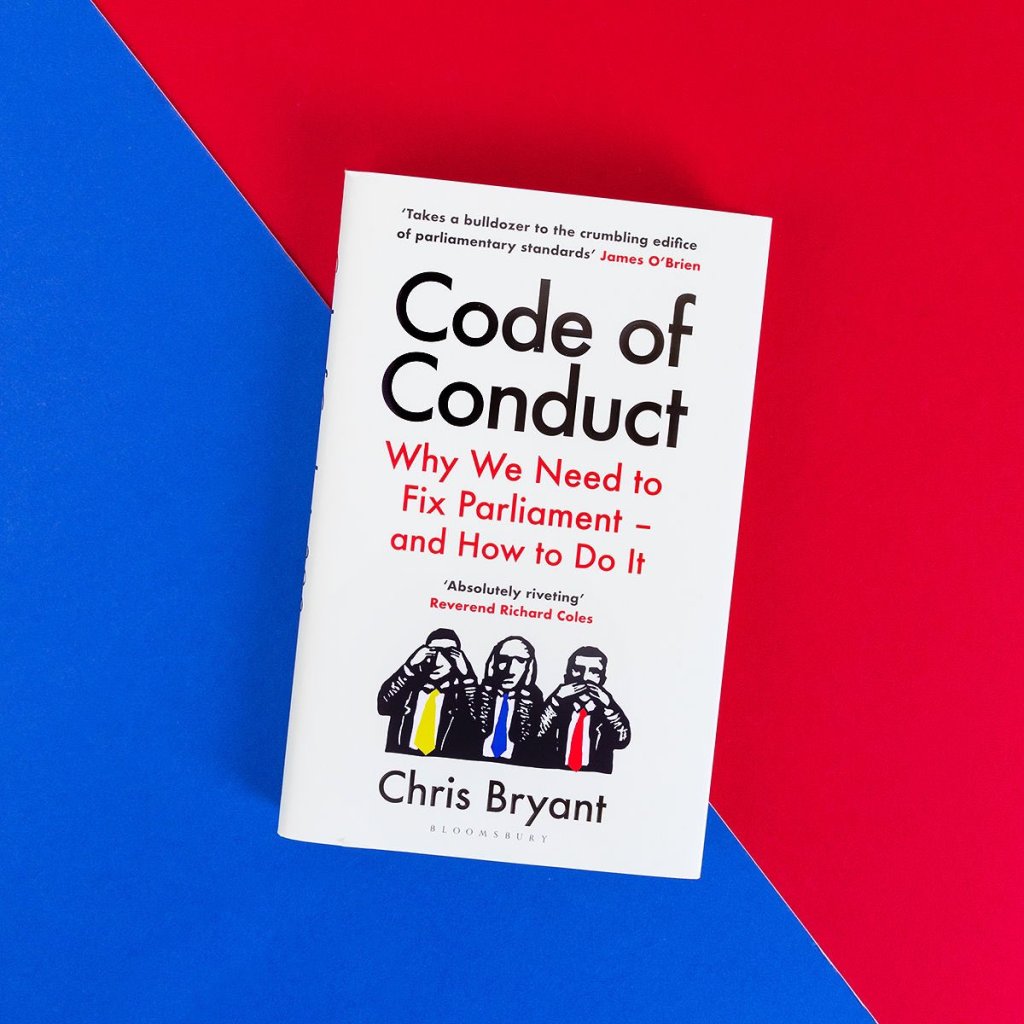
It is no secret that the last few years in British politics have been riven by scandal. Whether it’s the lobbying scandals of Owen Paterson and Scott Benton, the sexual misconduct scandals of Peter Bone and Chris Pincher, or the outright lies told by Boris Johnson and perpetuated by Truss and Sunak, it is clearly the contention of ‘Code of Conduct’ that standards of behaviour across Parliament and Whitehall are frankly in the gutter. Writing persuasively and humorously, former chair of the Standards Committee Chris Bryant MP sets out these issues, while suggesting practical changes that could start to improve things.
The diagnosis is nothing new if you have read similar books; Ian Dunt’s ‘How Westminster Work…and why it doesn’t’, or Rory Stewarts ‘Politics: On the Edge’ identify similar issues. The excessive power of the executive over parliament, the power of patronage and the whipping system and the partisan nature of politics mean there are real structural issues with how parliament operates. Where Bryant goes further than other observers of this is by delving deeper into the confusing patchwork of standards regimes that exist in Westminster. The Parliamentary Commissioner for Standards, the Standards Network, the Code of Conduct, the Behaviour Code, the Ministerial Code, the Independent Complaints and Grievance Scheme, the Independent Expert Panel. Bryant explains how this patchwork has evolved over time, why there are gaps and cracks in it, and what could be done to reform it.
Where Bryant’s expertise goes further is to look into other areas that are rarely mentioned; those of All Party Parliamentary Groups (APPG’s) and the concerns around internally lobbying. APPGs are informal groups set up around different areas of interest, and there are more groups than there are MPs. While some of these are clearly like-minded MPs working on areas they deeply care about, others receive significant funding from corporate interests for their activities. Of course, inviting experts into your group to provide their expertise is not necessarily a bad thing, we the public do not know who is funding these groups and what their motivations are. The concern is that the influence of such corporate lobbying groups have managed to leech their way into Parliament in an opaque way, influencing the agenda of parliamentarians.
But why does any of this matter? Surely there are bigger issues in our country than naval gazing about how things operate in the Pugin-carpeted corridors of power? To Bryant, this comes down to the fundamental issue of trust. Peppered throughout the book are worrying statistics about the lack of trust the public have in politics and politicians, and how this has corroded further and further in recent years. If the public cannot trust how politicians behave, then how can they trust they will change their lives for the better? If we’re honest, standards in Parliament is niche interest, but it shouldn’t be. We should all care about how politicians behave, how they legislate and how they are held to account when they misbehave.
There is often a frustration with political books that they are very good at diagnosing the illness, but poor at proposing the cure. Chapter after chapter is written which aims to expose the systemic weakness, with perhaps a solitary chapter proposing radical reforms but in very little detail. In this regard, ‘Code of Conduct’ does better than other books. There is of course a focus on the problems, but there are also clear and practical steps that could help resolve them. These are suggested throughout the book, and summarised expertly at the end. It is demonstrative of the fast-paced nature, that this updated version of the book acknowledges in its epilogue that some of the suggestions made have since been implemented, with others under consideration. With the author now a minister in the new Labour government, he can potentially have more significant influence on if and how the executive makes the changes suggested than he ever could have done as chair of the conduct committee. ‘Code of Conduct’ expertly outlines some of the fixes that parliament could bring in – let’s see if the Labour government now makes some of those changes that are desperately needed.
‘Code of Conduct: Why We Need to Fix Parliament – and How to Do It’ is written by Chris Bryant, and is published by Bloomsbury Publishing.



 Politics with Alex
Leave a reply to Book Review: Failed State by Sam Freedman – Politics with Alex Cancel reply